
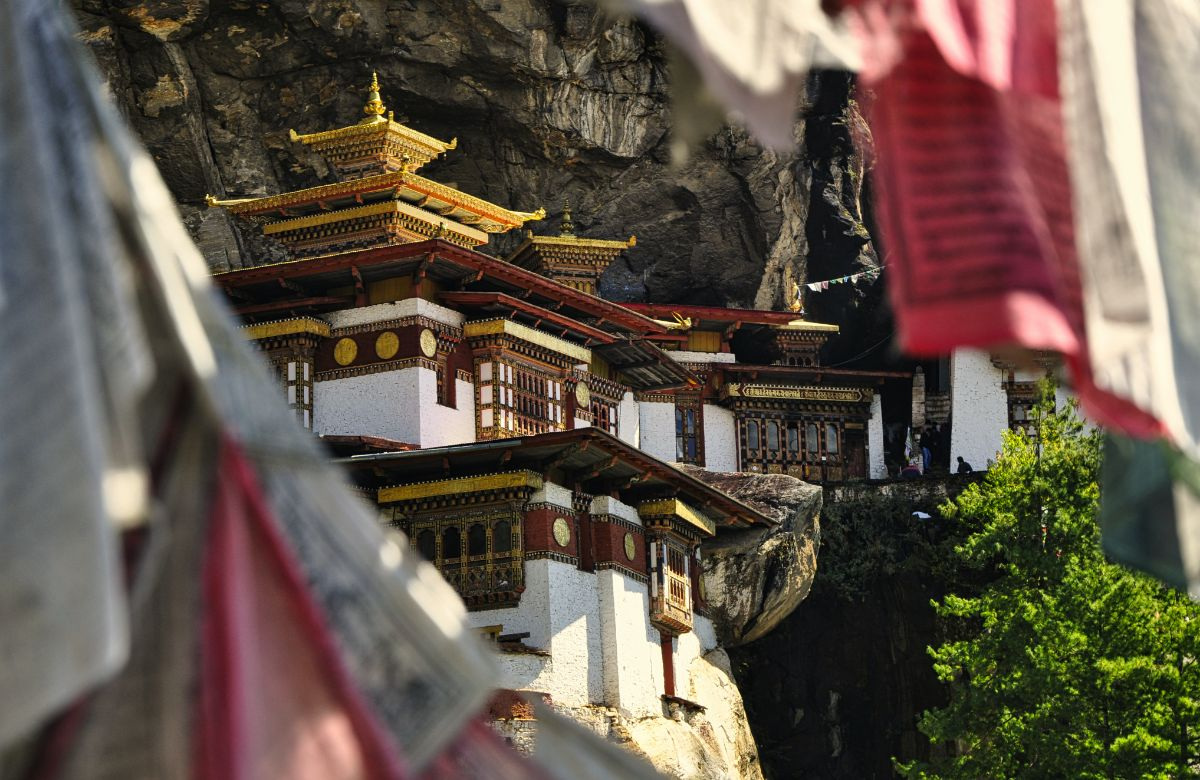
Bhutan: The Last Himalayan Kingdom

Tucked between two giants, Bhutan is a rare place where tradition isn’t a performance—it’s a way of life.

Where is Bhutan?

Imagine a country the size of Switzerland, but with vertical terrain that defies belief. Bhutan occupies the eastern Himalayas, sandwiched between China (Tibet) to the north and India to the south, east, and west. Its coordinates—26°N to 28°N, 88°E to 92°E—tell a story of altitude: from subtropical plains to peaks over 7,000 meters, including Gangkhar Puensum, the world’s highest unclimbed mountain.

A People Like No Other

Bhutan’s 700,000 citizens are as varied as its landscapes. The Ngalongs in the west, Sharchops in the east, and Lhotsampas in the south each contribute distinct threads to the national fabric. What unites them is a radical idea: opportunity isn’t determined by class or birth. Revered monks remain central to community life, and respect runs deeper than the mountain roots—this is a society built on genuine equality.

Getting Here is Part of the Adventure

By Air: Paro International Airport is Bhutan’s only gateway to the sky, served by Druk Air and Bhutan Airlines from Bangkok, Delhi, Kolkata, Kathmandu, Singapore, and Dhaka. The descent between Himalayan peaks is unforgettable.

By Land:
Three entry points from India welcome overland travelers—Phuentsholing (most popular, near Siliguri), Gelephu, and Samdrup Jongkhar.

Essential: All foreign visitors (except Indian nationals) must book through a licensed Bhutanese tour operator and secure visa approval before arrival. No independent backpacking here—Bhutan chooses quality over quantity.

Culture That Lives and Breathes

This isn’t a museum. Bhutan is the only country where ancient traditions don’t just survive—they dominate daily life. Every valley tells stories; every festival explodes with swirling dances and beating drums. The culture acts as both shield and pride, protecting sovereignty while giving citizens an unshakeable identity.
Dress: Men wear the gho, a knee-length robe belted at the waist. Women wear the kira, an ankle-length dress over a blouse (wonju), topped with a jacket (tego). Silver brooches called koma secure it all together.
Sports: Archery isn’t just the national sport—it’s a social event filled with singing, breakfast feasts, and good-natured rivalry. Traditional games like khuru (darts) and degór (discus) keep communities connected.

Food with Fire

Rice is king in lower regions, while high-altitude dwellers favor wheat and buckwheat (khulay cakes and puta noodles). Every meal features chilies—fresh or dried—because Bhutanese cuisine doesn’t do mild. The national obsession? Ema datshi: chilies simmered in local cheese. Try also shamu datshi (mushroom version) and kewa datshi (potato version). Pork, beef, yak meat, and chicken round out a diet that’s hearty, simple, and unapologetically spicy.

A Capital in the Clouds

Thimphu, Bhutan’s capital, houses 100,000 residents across 26 square kilometers. It’s home to royal residences, government ministries, and the only traffic light-free capital in the world. Here, tradition and governance walk hand-in-hand.

Why Bhutan Matters

In an age of homogenization, Bhutan stands apart. Over 70% forest cover makes it carbon-negative. Ancient rhythms still dictate modern life. This is a country that measures Gross National Happiness over GDP, where every visitor is a guest, not a tourist commodity. Come not to see a show, but to witness a culture that has solved the riddle of modernity without losing its soul.