0 (0 Reviews)
From: €0.00
0
(0 review)
Check
Duration

10 Days 9 Nights

Tour Type

Daily Tour

Group Size

6 people

Languages

English

About this tour

Immerse yourself in Bhutan’s most mystical celebration—a festival where sacred fire rituals, masked deities, and ancient prophecies converge in the spiritual heartland of Bumthang. The Jambay Lhakhang Drup is not merely a festival; it is a living transmission of tantric Buddhism, held at one of the kingdom’s oldest temples founded in 659 AD by Tibetan King Songtsen Gampo. This 10-day cultural pilgrimage weaves festival pageantry with intimate explorations of Bhutan’s sacred geography: from the cliffside sanctuary of Taktsang Monastery to the riverine grandeur of Punakha Dzong, from the mountain passes where prayer flags flutter at 3,400 meters to the remote valleys where treasure-revealers once discovered holy relics. You will join thousands of Bhutanese villagers who travel for days by foot and horseback to receive blessings, witness the midnight naked dance that sanctifies the ground, and participate in a tradition Guru Rinpoche himself is said to have prophesied. This is Bhutan unveiled—in its full spiritual intensity, artistic splendor, and communal devotion.
Festival Significance
The Jambay Lhakhang Drup commemorates Guru Rinpoche’s establishment of Buddhism in Bumthang and his subjugation of the local demon Shelging Karpo. The festival’s centerpiece—the Mewang (Fire Ceremony)—features dancers leaping through flames to ritually purify the ground, while the naked dance at midnight is a tantric ritual believed to confer powerful blessings and protection from misfortune.
Tour Customization
This itinerary is specifically timed for the Jambay Lhakhang Drup (typically late October/early November). Contact us for exact festival dates, which vary by lunar calendar. We can extend with additional days for hiking, meditation retreats, or visits to the remote Haa Valley.Ready to Witness Bhutan’s Living Buddhism?
The Jambay Lhakhang Drup Festival is a window into Bhutan’s soul—a celebration where faith, art, and community merge in sacred firelight. Limited hotel availability during festival season requires early booking. Reserve your place in this once-in-a-lifetime cultural odyssey today.

Highlights

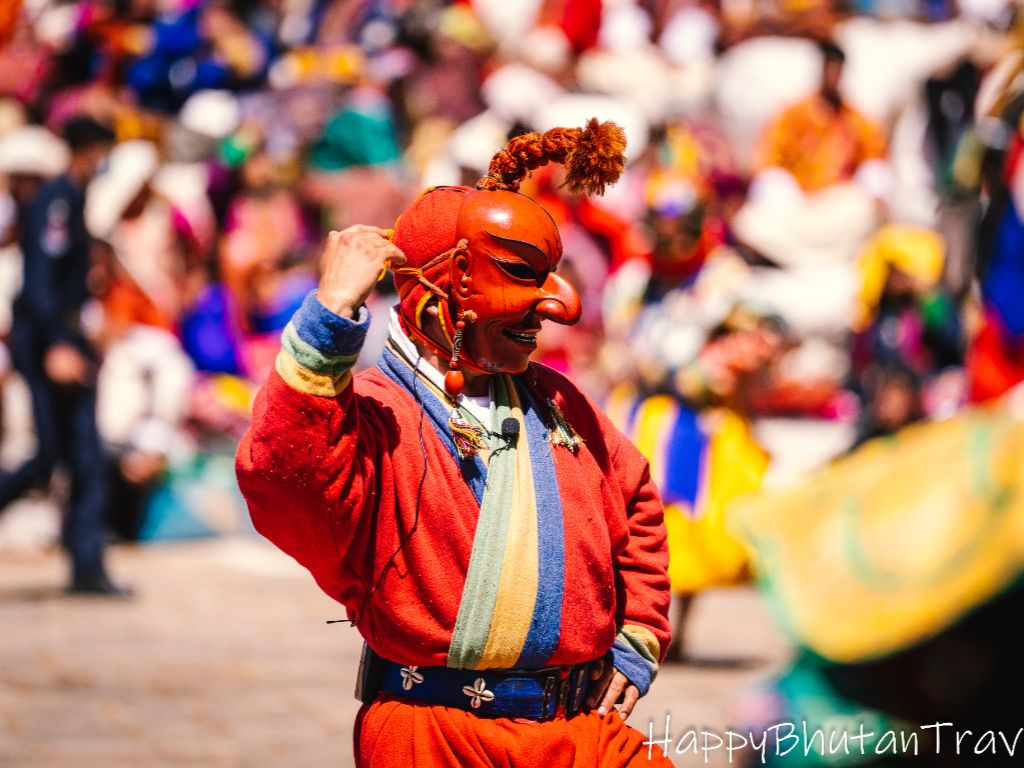
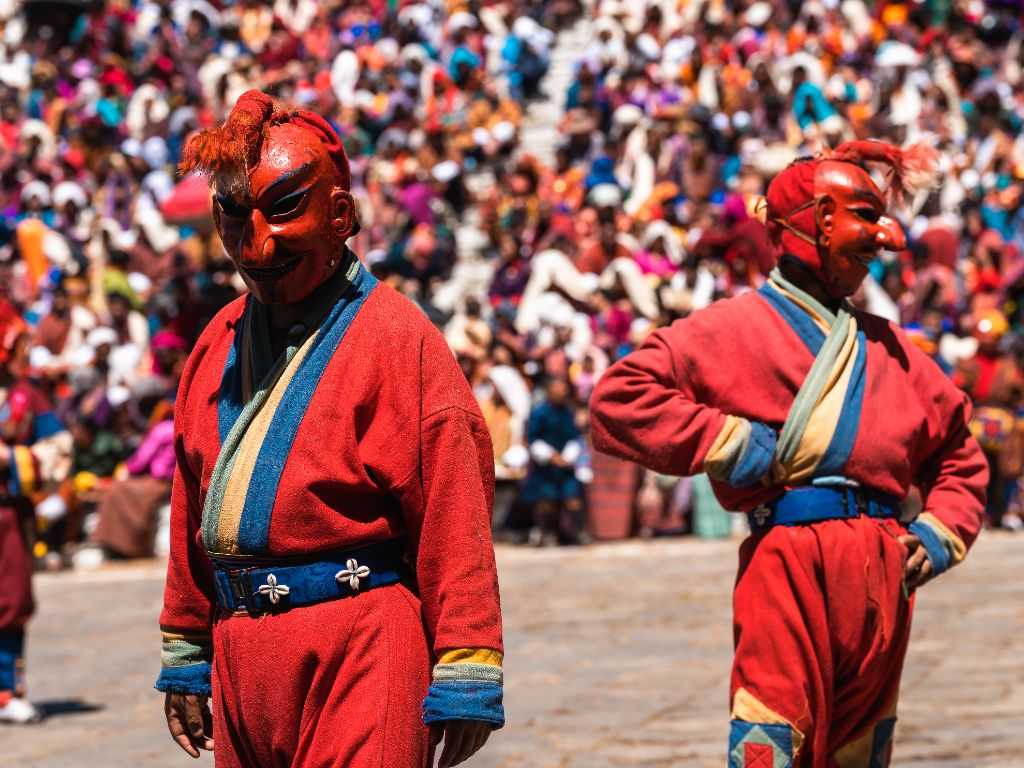
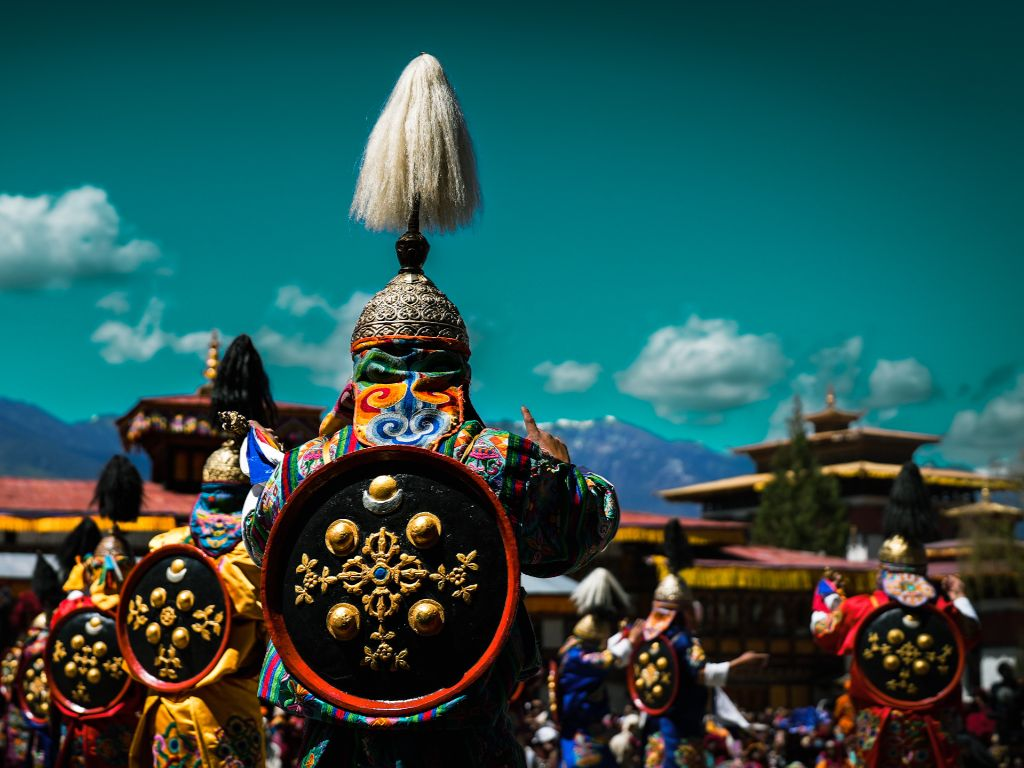
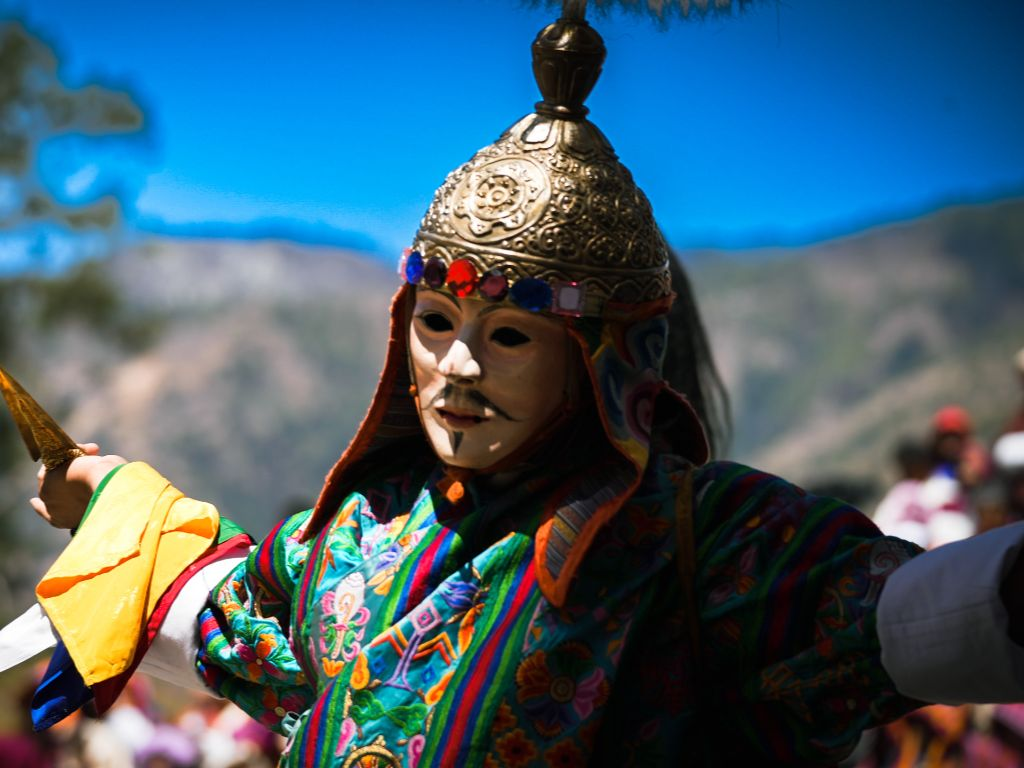
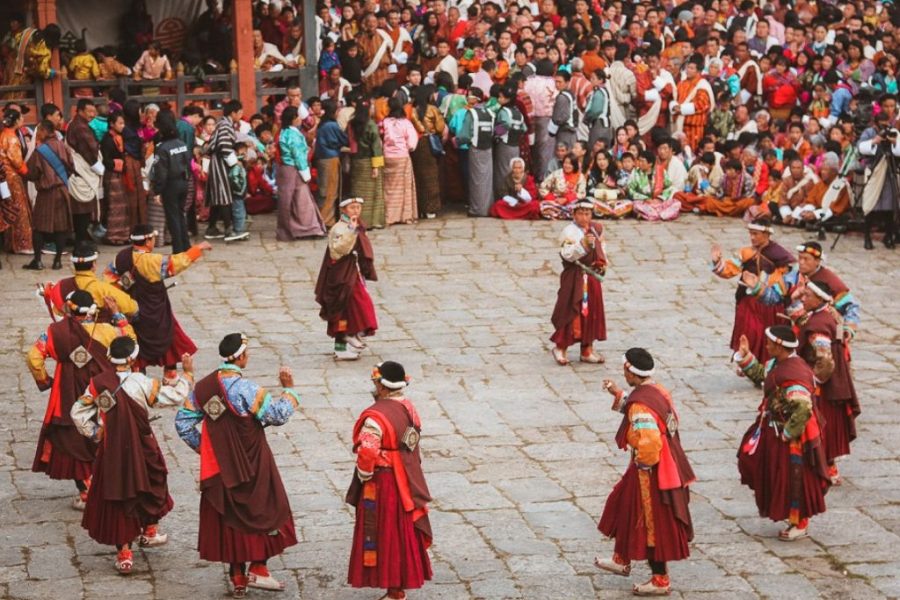
  • Festival Immersion: Experience Jambay Lhakhang Drup's masked cham dances performed by monks in silk brocade and the legendary Mewang fire ceremony, where naked dancers leap through flames to purify karma and bless the harvest
  • Ancient Temples: Visit Jambay Lhakhang (659 AD), one of 108 temples built to subdue a demoness; Kurjey Lhakhang where Guru Rinpoche left his body imprint; and Tamshing Lhakhang with 16th-century frescoes by treasure-revealer Pema Lingpa
  • Sacred Architecture: Explore Punakha Dzong at the confluence of two rivers, Trongsa Dzong (ancestral home of the royal family), and Tashichho Dzong housing the King's throne room
  • Tiger's Nest Pilgrimage: Ascend to Taktsang Monastery (3,120m), Bhutan's holiest site where Guru Rinpoche landed on a tigress
  • Cultural Encounters: Walk through Bumthang's Tang Valley to the private Ogyen Choling Palace Museum, witness traditional farmhouse life, and explore the 17th-century fortress of Jakar Dzong
  • Himalayan Passes: Cross Dochu La (3,100m) with its 108 memorial chortens and Pele La (3,420m) on the Black Mountain range, offering views of Mount Gangkar Puensum
  • Living Traditions: Join locals at the Centenary Farmers Market, observe weavers at the Textile Museum, and receive blessings from monks at 12th-century Changangkha Temple
  • Historical Depth: Visit Ta Dzong Museum's rare Avalokiteshvara thangka and the Heritage Museum's rural artifacts, plus the ancient watchtower at Semtokha Dzong

Included/Excluded

  • All meals [Breakfast / lunch / dinner and evening tea / coffee].
  • Entrance fees for museums and monuments.
  • Accommodation [twin / double sharing basis]. Single room supplement is extra.
  • All transportation within the country, including airport transfers.
  • SDF & government taxes.
  • Bhutan visa fee.
  • English-speaking local guide.
  • Sightseeing.
  • Bottled water.
  • Drukair/Bhutan Airlines fares.
  • Insurance premiums.
  • Single room supplement charges
  • Payments for service provided on a personal basis.
  • Cost for any services not mentioned in the “Cost Include head”.
  • Personal expenses such as laundry, incidentals, horse rides, rafting, bellboy charges, tips for guide & driver.
  • Alcoholic beverages and soft drinks, etc.

Itinerary

Your Druk Air flight descends through the world's most dramatic mountain approach, with Everest, Kanchenjunga, and Bhutan's sacred peaks visible from your window. Upon landing at Paro International Airport (2,200m), your guide greets you with a ceremonial khadar scarf. After clearing customs, drive to Thimphu (1.5 hours), tracing the Pa Chhu River through pine forests. En route, stop at the Takin Preserve to view Bhutan's national animal—a bizarre goat-antelope hybrid with a legend linking it to the Divine Madman. In Thimphu (2,320m), check into your hotel before an evening orientation on Bhutanese etiquette. Overnight in Thimphu.

Begin at the National Memorial Chorten, a white-and-gold stupa where elderly devotees spin prayer wheels in memory of the Third King (Jigme Dorji Wangchuck). Continue to the 12th-century Changangkha Temple, perched on a ridge above the city, where parents bring newborns for naming ceremonies. Visit the Zilukha Nunnery to hear the melodic chanting of Buddhist nuns.
 
After lunch, tour Tashichho Dzong, the massive fortress-monastery that houses the King's summer throne room, the Je Khenpo's offices, and the central monk body. If time permits, visit the Heritage Museum (a restored 19th-century farmhouse displaying rural artifacts) and the Textile Museum where master weavers demonstrate intricate kushuthara patterns. End with a stroll through the Centenary Farmers Market (weekends only), where vendors from 20 valleys trade organic produce, fiery chilies, and aged cheeses. Overnight in Thimphu.

Drive over the Dochu La Pass (3,100m), where 108 gleaming chortens commemorate Bhutan's victory over insurgents. On clear days, the entire eastern Himalayan range—from Masangang to Gangkar Puensum—unfolds in a silver arc. The descent passes through rhododendron forests that erupt in crimson and pink blooms in April-May, entering the subtropical Punakha Valley (1,200m).
 
Visit Punakha Dzong, the "Palace of Great Happiness," built in 1637 at the confluence of the Mo Chhu (Female) and Pho Chhu (Male) rivers. This architectural masterpiece, still the winter home of the Je Khenpo, features four gold-silver embossed entrance pillars carved from single cypress trunks. Walk across the wooden cantilevered bridge to explore courtyards where the first King was crowned in 1907.
 
A short walk through rice terraces leads to Chimi Lhakhang, the 1499 "Temple of the Divine Madman" (Drukpa Kuenley). The temple's phallus imagery and fertility blessings draw childless couples from across Bhutan. Receive a traditional blessing from the monk with a wooden phallus, symbolizing protection and prosperity. Overnight in Punakha.

This 8-hour journey crosses the Pele La Pass (3,420m) on the Black Mountain range, entering central Bhutan. Stop at Chendebji Chorten, an 18th-century stupa patterned after Kathmandu's Swayambhunath, built to subdue a demoness's spirit.
 
Continue to Trongsa, the ancestral home of Bhutan's royal dynasty. View the spectacularly sited Trongsa Dzong from a viewpoint across a deep canyon, then explore its maze of temples and courtyards. Visit the Ta Dzong Museum housing the Royal Family's historical artifacts and a sacred book of divination. After lunch, drive to Bumthang (2,600m), the spiritual heartland where barley fields and apple orchards nestle beneath the Himalayan wall separating Bhutan from Tibet.
 
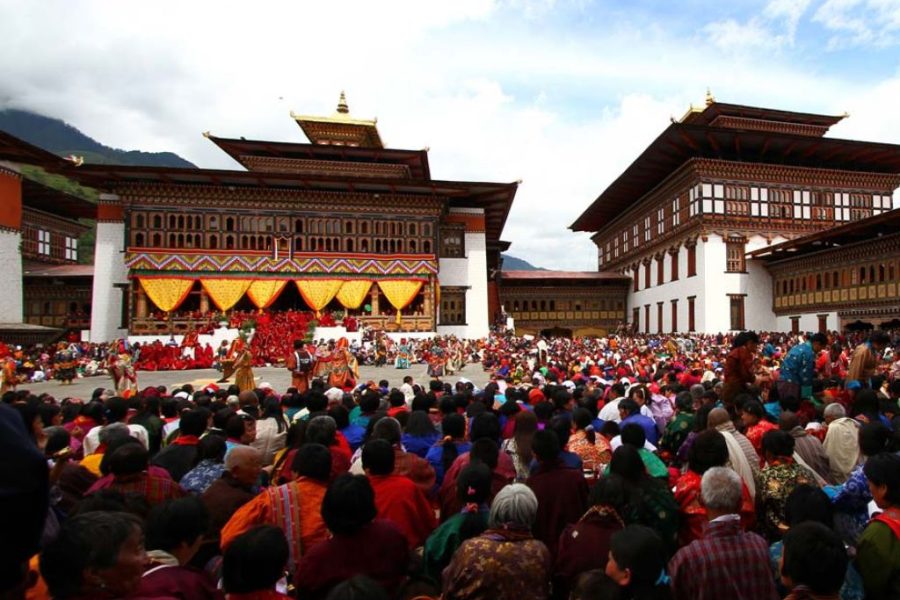
Evening: Attend the opening ceremonies of the Jambay Lhakhang Drup Festival. Try to stay awake until midnight to witness the Mewang fire ceremony—naked dancers wearing only masks leap through flames, performing a tantric ritual that sanctifies the earth and grants blessings for the harvest. Overnight in Bumthang (Jakar).

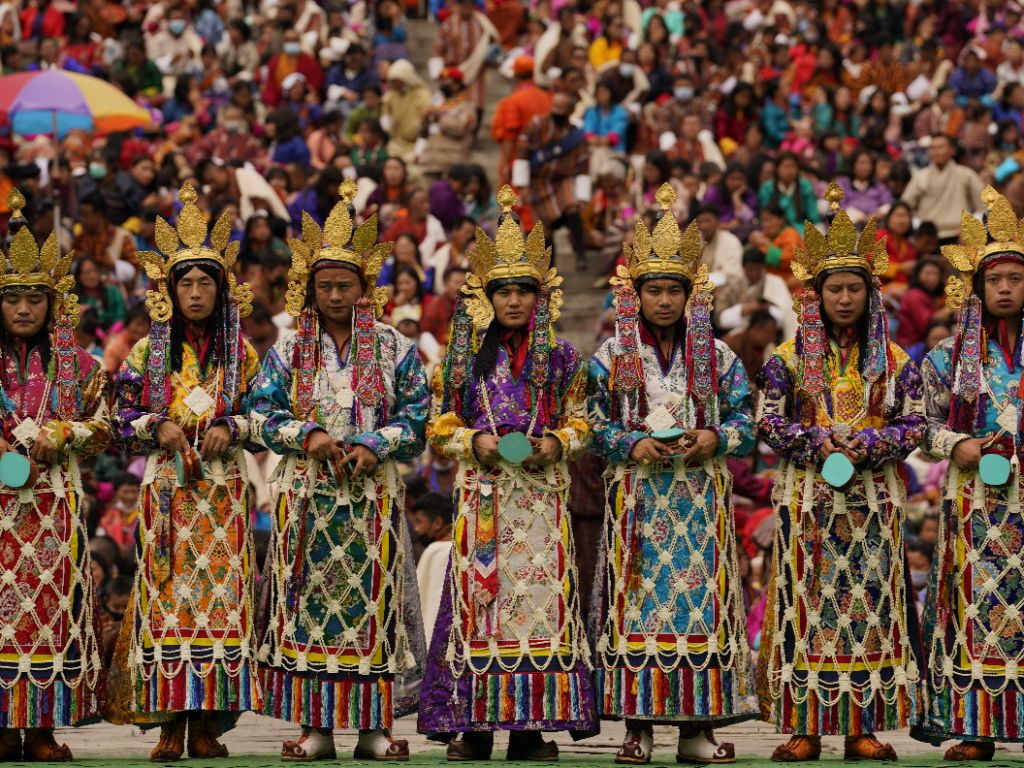
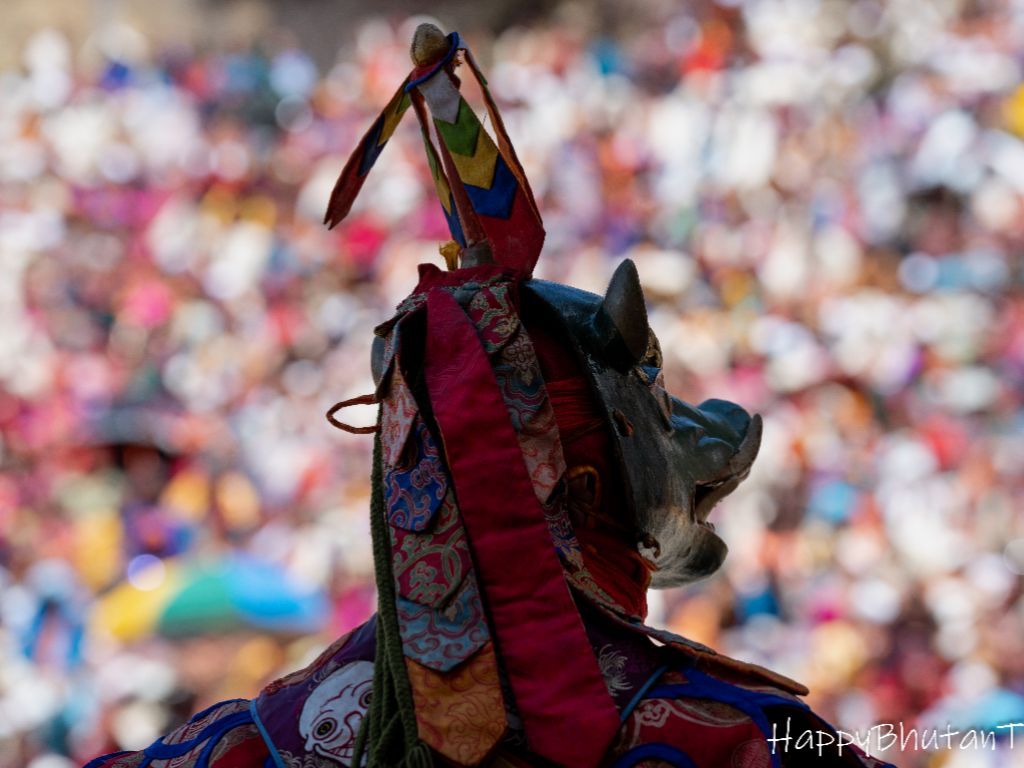
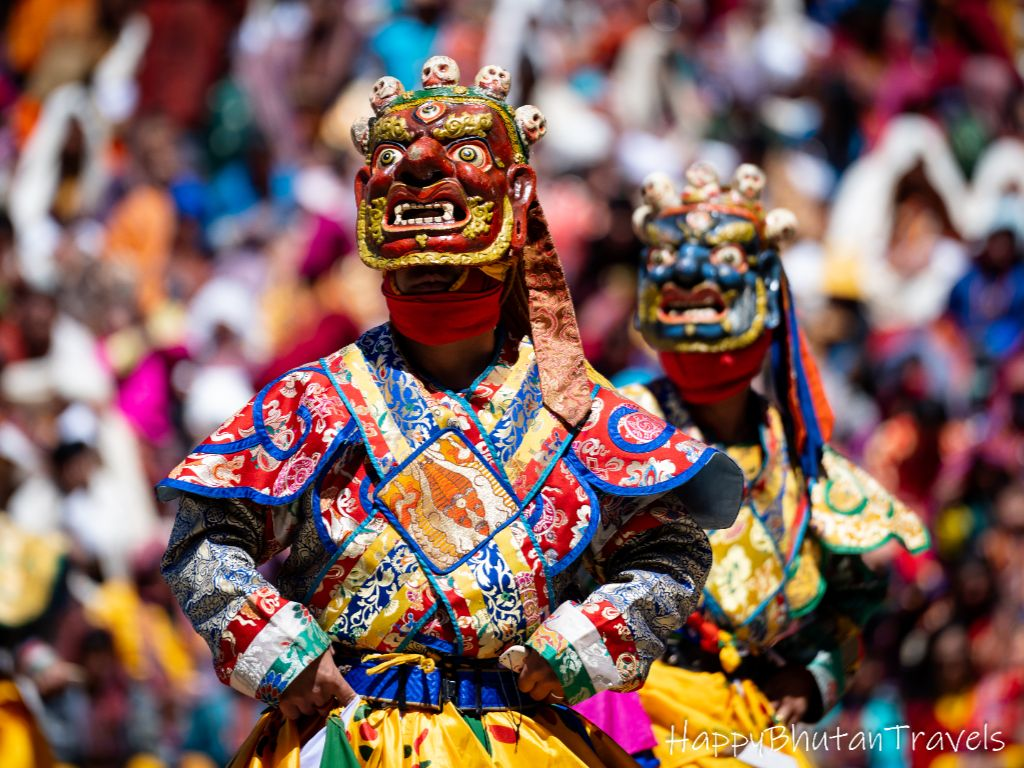
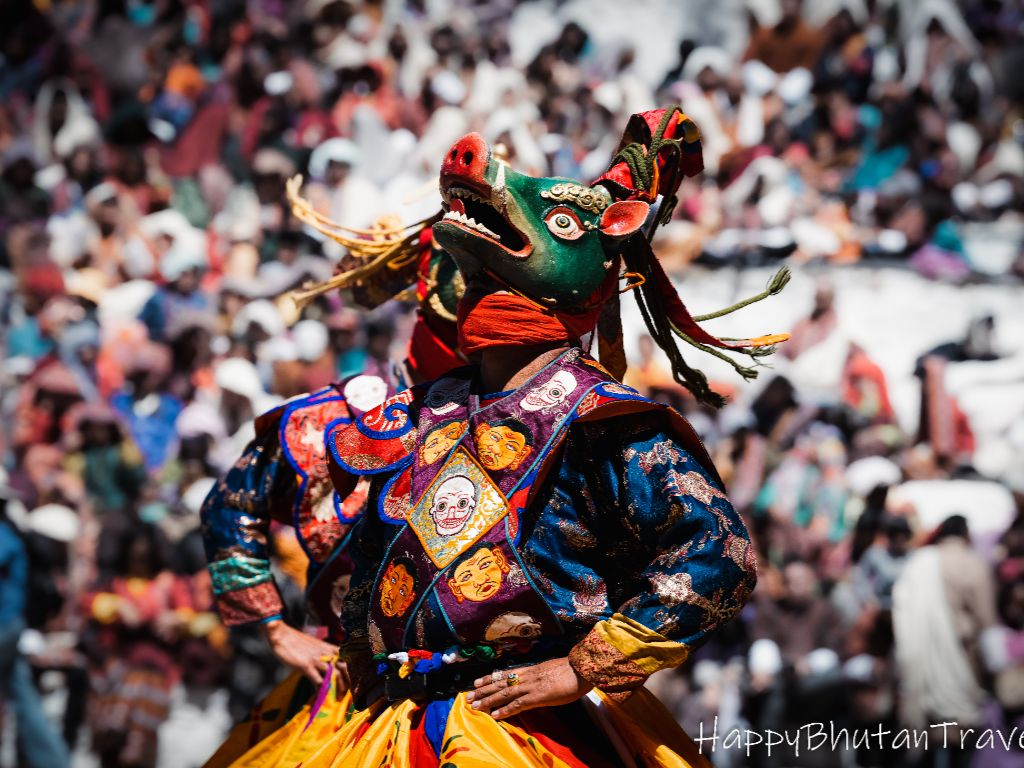
Morning: Return to Jambay Lhakhang (659 AD), one of 108 temples built by King Songtsen Gampo to pin down a demoness. The temple's Drup festival celebrates Guru Rinpoche's subjugation of evil spirits. Witness masked cham dances performed by monks in silk brocade costumes—each dance a medieval morality play teaching Buddhist principles. The Guru Tshengye (Eight Manifestations of Guru Rinpoche) is a highlight.
 
Afternoon: Visit Kurjey Lhakhang, where Guru Rinpoche meditated in a cave in 746 CE, leaving his body imprint on a rock. The three temples house his sacred remains and a natural rock face bearing his silhouette. Continue to Tamshing Lhakhang, founded in 1501 by treasure-revealer Pema Lingpa, featuring his original frescoes and a ceiling of ancient banners.
 
Visit Jakar Dzong, the "Castle of the White Bird," built in 1549 and now the district administrative center. Explore the village of Jakar, Bumthang's main township, with its stone houses and handicraft shops. Overnight in Bumthang.

Morning: Return to the festival for more sacred dances, or embark on an excursion to Tang Valley, Bumthang's most remote and traditional valley.
 
Afternoon: Hike 45 minutes uphill to Ugyen Choling Palace, a 16th-century manor built by Trongsa Penlop Tshokey Dorji. Now a private museum, it houses three floors of exhibits on feudal Bhutanese life: a dakini dance costume made of bone, petrified yak dung used for gunpowder, ancient kitchen implements, and a book of divination. The palace hosts fewer than 200 visitors annually, offering exclusive cultural immersion.
 
Visit Tang Rimochen Lhakhang (14th century), where Guru Rinpoche meditated, and Mebar Tsho (Burning Lake), a sacred gorge where Pema Lingpa discovered religious treasures in the 15th century while emerging with a still-burning butter lamp. This is an ideal spot for meditation. Evening return to Bumthang. Overnight in Jakar.

Morning visit to Kurjey Lhakhang for final blessings before driving over the Yutong La Pass (3,400m) into the Gangtey Valley (Phobjikha). This glacial U-shaped valley is a protected winter roost for 300 endangered black-necked cranes (visible October-March). Visit Gangtey Monastery (17th century), a dramatic hilltop monastery overlooking the wetlands. Explore the Black-Necked Crane Information Centre and hike the nature trail through dwarf rhododendron forests. Overnight in Gangtey.

Drive back to Thimphu (3 hours), stopping for lunch and time to browse handicraft stores for woven textiles, thangkas, and dzi beads. Visit Semtokha Dzong (1627), Bhutan's oldest fortress now housing the Institute for Language and Culture Studies. Continue to Paro (1 hour), checking into your hotel. Afternoon at leisure—perhaps visit the town's artisan shops or receive a hot stone bath. Overnight in Paro.

After breakfast, drive to the trailhead for Taktsang Monastery (3,120m). The 2-hour uphill hike climbs nearly 900 meters through pine forests where prayer flags span chasms. For those unable to hike, horses can be arranged to the viewpoint. The monastery appears impossibly glued to a vertical cliff—built around the cave where Guru Rinpoche meditated for three months in 747 CE, arriving on the back of a tigress. Explore the temple complex where butter lamps illuminate ancient statues before descending to a teahouse for refreshments.
 
Afternoon: Drive to Drukgyel Dzong ruins, built in 1647 by Shabdrung Ngawang Namgyal to commemorate victory over Tibetan invaders. On clear days, the sacred Mount Jomolhari (7,314m) provides a stunning backdrop. Visit Kyichu Lhakhang (7th century), one of Bhutan's oldest temples housing a miraculous orange tree that bears fruit year-round. Evening free for last-minute shopping or a farmhouse dinner. Overnight in Paro.

Breakfast at the hotel, then transfer to Paro International Airport for your onward flight. As Druk Air lifts above the valley, carry with you the blessings, memories, and deep cultural connection forged during Bhutan's most sacred festival. Tashi Delek!

Durations

Fullday (+7hours)

Language

English

Frequently asked questions

Visitors of all nationalities, except those from India, require a visa before entering Bhutan. For all visitors, except those from Bangladesh and the Maldives, this visa must be applied for and approved in advance of travel. Visitors from Bangladesh and the Maldives also require a visa, but this can be applied for and approved either in advance of travel or upon arrival in Bhutan. 

Visitors from India are able to apply for a permit but are required to hold an Indian passport or an Indian voter ID card. For Indian nationals under the age of 18, a passport or a birth certificate can be used to enter and they must be accompanied by a legal guardian.

Nationals from Switzerland and Thailand holding diplomatic or government-official passports are eligible for a visa at their port of entry.

You can apply online for a visa here, or if you’re travelling with a tour operator, they may apply on your behalf. Read more about the visa here

Visitors from Bangladesh and the Maldives requiring a visa can apply either online before travelling or in person upon arrival in Bhutan.

The SDF is USD 100 per night for adults from all countries except for India. Children aged between 6 years and who have not yet turned 12 are eligible to pay USD 50 per night. Children who have not yet turned 6 years old do not have to pay any SDF.

The SDF for Indian nationals (showing a valid Indian passport or Voter ID card) is Nu. 1,200 (or the equivalent amount in Indian rupees) per person, per night. Children aged between 6 years and who have not yet turned 12 are eligible to pay Nu./INR 600 per night. Children who have not yet turned 6 years old do not have to pay any SDF.

Yes, the SDF will be refunded by the Department of Immigration for any cancelled or shortened trips; any bank charges will be deducted from the total refunded. Requests for SDF refunds should be submitted online using the visa portal. The refund will be processed after visitors leave Bhutan.

You can change your local currency for ngultrum upon arrival at Paro International Airport or at banks, larger hotels and authorised currency exchange businesses in Thimphu.

You may bring cash equivalent to US$10,000 into the country.

Tour's Location

From: €0.00

Owner

pravinnepal97

Member Since 2025

Information Contact

Email

[email protected]

Website

travelinbhutan.com

Phone

(+975) 17640486 / 77373370